
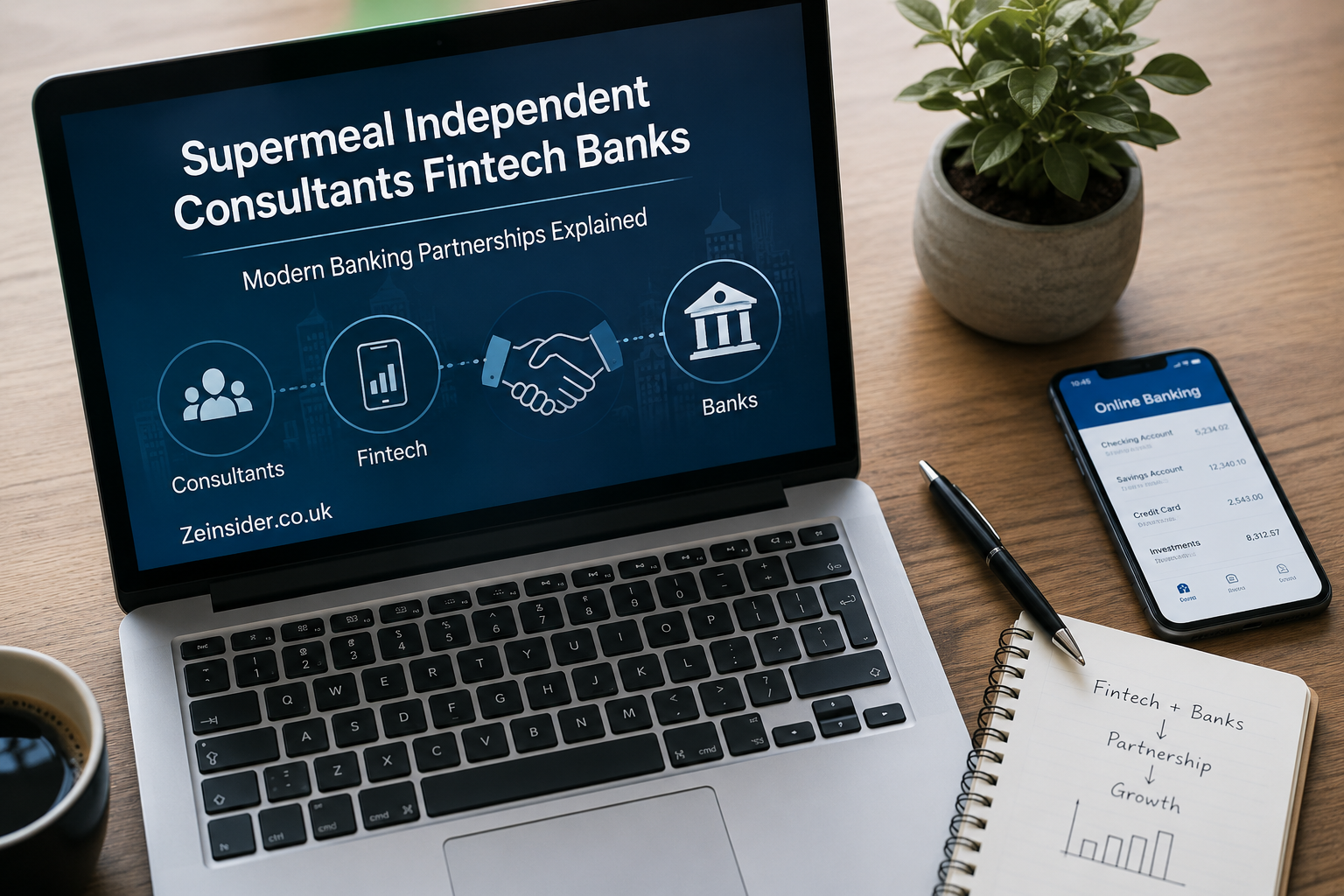
The relationship between supermeal independent consultants fintech banks is becoming increasingly important as financial institutions accelerate digital transformation. Traditional banks are no longer competing only with other banks. They now face competition from fintech startups, embedded finance providers, digital wallets, and AI-powered financial platforms that deliver faster and more personalized customer experiences. As a result, many institutions rely on independent consultants to bridge the gap between legacy banking systems and modern financial technology. These consultants provide specialized expertise that helps organizations modernize infrastructure, strengthen cybersecurity, improve compliance, and launch innovative banking products without dramatically increasing internal staffing costs. The growing collaboration between supermeal independent consultants fintech banks demonstrates how external expertise can support long-term growth while reducing operational risks. Organizations that embrace strategic consulting often adapt faster to changing regulations and evolving customer expectations. Understanding this ecosystem is essential for financial leaders planning sustainable digital transformation.
Quick Answer
Supermeal independent consultants fintech banks refers to the collaboration between specialized independent consultants, fintech innovators, and banking institutions to improve digital banking, regulatory compliance, operational efficiency, cybersecurity, customer experience, payment technologies, and financial innovation. Independent consultants provide strategic guidance, technical expertise, and implementation support that enables fintech companies and traditional banks to remain competitive in a rapidly changing financial landscape.
Understanding Supermeal Independent Consultants Fintech Banks
The concept of supermeal independent consultants fintech banks reflects a growing partnership model where experienced financial consultants assist banks and fintech organizations in solving complex operational challenges. Instead of relying exclusively on internal teams, financial institutions increasingly seek specialized professionals with expertise in digital banking, payment systems, regulatory compliance, artificial intelligence, risk management, and cloud infrastructure. Independent consultants bring years of cross-industry experience, allowing organizations to identify opportunities that internal departments may overlook. They evaluate business processes, recommend technology improvements, and oversee digital transformation projects from planning through implementation. Their independent perspective often results in more objective recommendations because they focus on measurable business outcomes rather than organizational politics. Financial institutions also benefit from flexible consulting engagements that reduce hiring costs while providing access to niche expertise. This approach allows banks to remain agile as financial technology continues evolving. Consequently, supermeal independent consultants fintech banks have become an important component of modern banking strategies.
Why Financial Institutions Need Independent Consultants
Financial services operate within one of the world’s most heavily regulated industries. Banks must continuously comply with changing regulations while maintaining secure digital services that customers expect to be available around the clock. Independent consultants help financial organizations identify compliance gaps before they become costly regulatory issues. They also assist with implementing Know Your Customer (KYC), Anti-Money Laundering (AML), fraud prevention, cybersecurity frameworks, and governance policies. Consultants frequently coordinate projects involving cloud migration, payment modernization, digital identity verification, and API integration. Since many fintech organizations grow rapidly, they often lack experienced internal specialists capable of managing enterprise-scale implementations. Independent consultants fill this expertise gap while helping teams adopt industry best practices. Their recommendations support improved operational resilience, stronger customer trust, and long-term business scalability. As digital finance becomes increasingly competitive, supermeal independent consultants fintech banks continue serving as trusted strategic advisors.
The Evolution of Fintech Banking Partnerships
The financial sector has changed dramatically over the past decade. Traditional banking institutions once relied almost entirely on proprietary systems developed over many years. Today, fintech companies introduce innovative services including instant payments, AI-powered lending, digital wallets, open banking APIs, and embedded financial products. Rather than competing directly, many banks now collaborate with fintech organizations to accelerate innovation while maintaining regulatory compliance. Independent consultants frequently coordinate these partnerships by evaluating technology compatibility, project governance, operational risks, and implementation strategies. They help establish communication between banking executives, software engineers, cybersecurity specialists, and compliance officers. Successful partnerships require careful planning because banking infrastructure often includes complex legacy systems. Consultants minimize disruption by developing phased migration strategies that balance innovation with operational stability. This collaborative model explains why supermeal independent consultants fintech banks continue gaining attention throughout the financial industry.
Key Drivers Behind Digital Banking Transformation
Several major trends continue influencing financial institutions worldwide. Customer expectations now emphasize convenience, instant transactions, personalized financial advice, and secure digital experiences across multiple devices. Regulatory authorities simultaneously introduce stricter compliance requirements that demand stronger governance and reporting capabilities. Advances in cloud computing, artificial intelligence, blockchain technology, and machine learning further reshape banking operations. Independent consultants evaluate these technologies and determine which innovations provide measurable business value rather than unnecessary complexity. They also conduct risk assessments before organizations invest in expensive modernization projects. Their recommendations help prioritize technology investments that improve operational efficiency while supporting future scalability. These evolving market conditions reinforce the strategic importance of supermeal independent consultants fintech banks in modern financial ecosystems.
Common Digital Transformation Objectives
Improving Customer Experience
Customer expectations continue rising as consumers compare banking experiences with leading technology companies. Independent consultants help financial institutions redesign digital journeys, simplify account opening, improve mobile banking interfaces, automate customer support, and streamline payment experiences. Better user experiences increase customer retention while reducing operational costs associated with manual service processes. Banks that successfully improve digital experiences strengthen customer loyalty and maintain stronger competitive positioning within increasingly crowded financial markets.
Strengthening Operational Efficiency
Operational efficiency remains a major priority for banks facing increasing regulatory costs and competitive pressure. Consultants identify repetitive manual processes suitable for automation using robotic process automation, artificial intelligence, workflow optimization, and cloud-based infrastructure. Modern automation reduces processing errors while accelerating service delivery across multiple banking departments. Efficient operations also improve employee productivity, enabling financial institutions to allocate resources toward innovation rather than repetitive administrative work.
Core Services Offered by Supermeal Independent Consultants
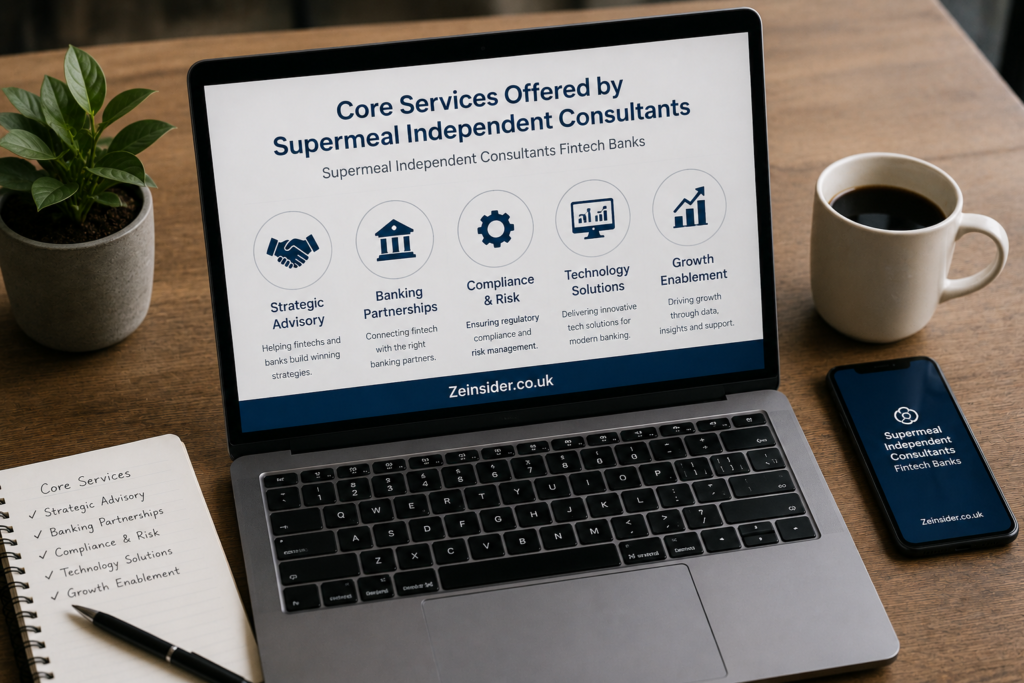
Independent consultants provide a broad range of professional services tailored to fintech companies and banking organizations. Their work typically begins with comprehensive business assessments that evaluate technology infrastructure, operational workflows, regulatory obligations, and cybersecurity readiness. Following these assessments, consultants create strategic roadmaps aligned with organizational objectives and regulatory expectations. Many also oversee software implementation, vendor selection, project governance, and performance monitoring throughout digital transformation initiatives. Their multidisciplinary expertise enables organizations to integrate technology, compliance, and business strategy into unified modernization programs. Independent consultants frequently collaborate with executive leadership while coordinating cross-functional implementation teams. Their objective recommendations reduce costly implementation mistakes while improving project success rates. This broad expertise explains the growing demand for supermeal independent consultants fintech banks across the financial services industry.
Strategic Consulting Areas
| Consulting Area | Primary Objective | Business Impact |
|---|---|---|
| Digital Transformation | Modernize banking systems | Improved efficiency |
| Regulatory Compliance | Meet financial regulations | Reduced compliance risk |
| Cybersecurity | Protect financial data | Stronger security posture |
| Cloud Migration | Improve scalability | Lower infrastructure costs |
| Risk Management | Identify operational threats | Better resilience |
| AI Strategy | Automate decision-making | Faster operations |
| Payment Systems | Modernize transactions | Better customer satisfaction |
| Data Analytics | Improve business insights | Smarter decision-making |
Technology Assessment and Planning
Technology planning represents one of the most valuable consulting services available to banks and fintech companies. Consultants evaluate existing software architecture, identify outdated infrastructure, analyze security vulnerabilities, and recommend future-ready technology solutions that align with business objectives. They prioritize projects according to business value, implementation complexity, regulatory requirements, and budget limitations. Detailed technology roadmaps help organizations avoid fragmented investments while maintaining consistent modernization strategies. Consultants also evaluate third-party vendors, negotiate implementation timelines, and establish governance frameworks for project success. Their strategic planning reduces uncertainty while ensuring investments support long-term organizational growth. Financial institutions benefit from structured modernization rather than reactive technology adoption. As innovation accelerates, supermeal independent consultants fintech banks continue guiding organizations through increasingly complex technology decisions.
Implementing Compliance Frameworks Across Financial Organizations
Regulatory compliance remains one of the most challenging aspects of modern financial services, particularly as digital products evolve faster than legislation. This is where supermeal independent consultants fintech banks provide measurable value by helping institutions create compliance frameworks that are scalable, adaptable, and aligned with regulatory expectations. Rather than treating compliance as a one-time checklist, experienced consultants build continuous monitoring systems that support ongoing risk management. They collaborate with legal teams, compliance officers, cybersecurity specialists, and executive leadership to ensure every digital initiative satisfies applicable financial regulations. Documentation standards, audit readiness, and policy governance become integrated into everyday operations instead of existing as isolated compliance projects. Consultants also recommend automation tools that reduce manual reporting and improve the accuracy of regulatory submissions. These structured approaches help organizations respond quickly to new regulations without disrupting customer services. As financial ecosystems become increasingly interconnected, supermeal independent consultants fintech banks continue helping institutions maintain both innovation and regulatory confidence.
Building a Risk-Based Compliance Strategy
A successful compliance strategy begins with identifying the areas of greatest organizational risk before implementing controls. Independent consultants evaluate transaction monitoring, identity verification, customer onboarding, third-party vendor relationships, data governance, and fraud prevention procedures. They then classify risks according to likelihood and potential business impact, enabling leadership teams to prioritize investments effectively. This structured approach improves resource allocation while reducing unnecessary operational costs. Consultants also establish key performance indicators (KPIs) that measure compliance effectiveness over time. Continuous assessment allows organizations to detect weaknesses before regulators or cybercriminals exploit them. Financial institutions benefit from stronger governance and more transparent reporting structures. These practices reinforce the strategic importance of supermeal independent consultants fintech banks in long-term business planning.
Cybersecurity and Data Protection in Fintech Banking
Financial organizations process enormous volumes of confidential customer information every day, making cybersecurity a strategic priority rather than merely an IT responsibility. Independent consultants help banks strengthen security architecture by evaluating network infrastructure, endpoint protection, identity management, encryption protocols, and incident response capabilities. Their assessments identify vulnerabilities before attackers can exploit them, reducing both financial and reputational risks. Consultants frequently recommend zero-trust security models, multi-factor authentication, security awareness training, and continuous vulnerability testing. They also help establish disaster recovery plans that ensure business continuity during unexpected cyber incidents. Since cybersecurity threats constantly evolve, financial institutions require adaptive security strategies instead of static defenses. Ongoing security assessments improve resilience while supporting customer confidence. Consequently, supermeal independent consultants fintech banks remain critical partners in protecting digital financial ecosystems.
Emerging Cybersecurity Technologies
Modern cybersecurity extends beyond traditional firewalls and antivirus software. Artificial intelligence now detects suspicious transaction patterns, while behavioral analytics identify unusual customer activity before fraud occurs. Cloud-native security platforms improve visibility across distributed environments, and automated threat intelligence enables faster response times. Independent consultants evaluate which technologies fit an organization’s infrastructure rather than recommending unnecessary investments. They balance innovation with practicality, ensuring security improvements deliver measurable value. Their expertise allows banks and fintech companies to adopt advanced security capabilities without creating excessive operational complexity. This balanced approach supports sustainable digital growth while minimizing cyber risks.
Artificial Intelligence and Automation in Financial Services
Artificial intelligence has transformed nearly every aspect of banking operations, from fraud detection and loan underwriting to customer support and financial forecasting. Independent consultants help organizations determine where AI provides genuine business value instead of simply following industry trends. They analyze existing workflows and recommend automation opportunities that improve efficiency while maintaining regulatory compliance. Machine learning models can process vast datasets faster than manual review processes, enabling institutions to make better-informed decisions in real time. Consultants also ensure AI implementation remains transparent, ethical, and aligned with governance requirements. Employee training accompanies automation initiatives so teams understand how to collaborate effectively with intelligent systems. Successful AI adoption improves operational performance while enhancing customer satisfaction. This ongoing innovation further highlights the value of supermeal independent consultants fintech banks within modern financial institutions.
AI Applications Across Banking
| AI Solution | Primary Function | Business Benefit |
|---|---|---|
| Fraud Detection | Identify suspicious transactions | Reduced financial fraud |
| Chatbots | Customer support | Faster response times |
| Credit Scoring | Loan evaluation | Better lending decisions |
| Predictive Analytics | Forecast customer behavior | Improved planning |
| Process Automation | Automate repetitive tasks | Lower operational costs |
| Document Intelligence | Analyze financial documents | Increased efficiency |
| Risk Analytics | Evaluate financial exposure | Better governance |
| Personalized Banking | Customer recommendations | Higher engagement |
Future Trends Shaping Supermeal Independent Consultants Fintech Banks
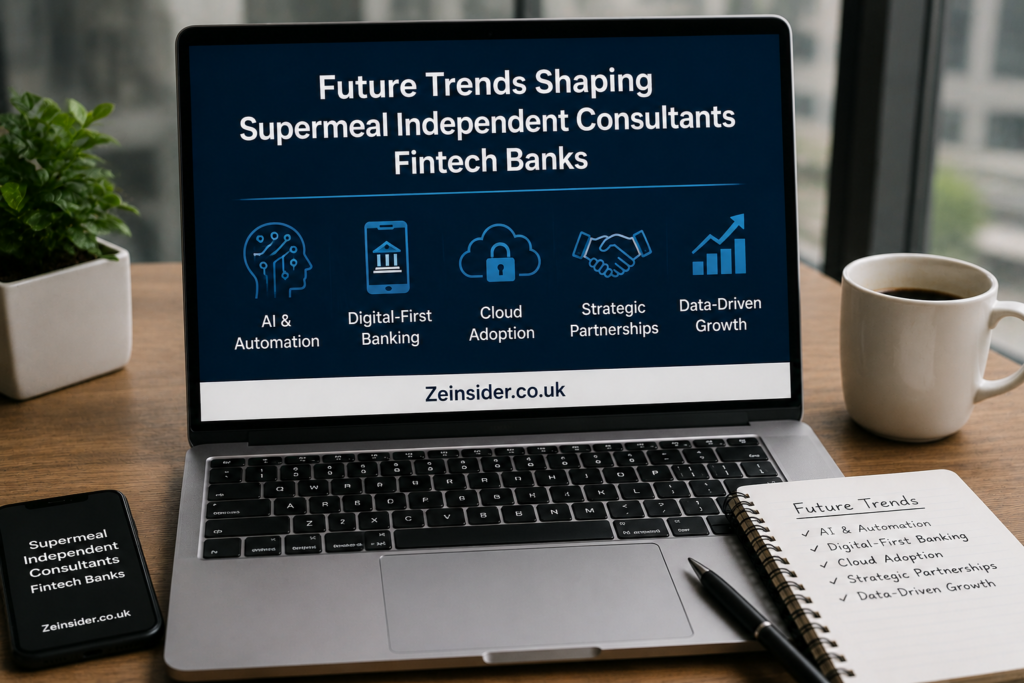
The next decade will likely bring even greater collaboration between consultants, fintech innovators, and banking institutions. Open banking ecosystems continue expanding, enabling secure data sharing among financial service providers. Embedded finance allows non-financial companies to integrate banking services directly into customer experiences. Digital identity verification is becoming more sophisticated through biometric authentication and decentralized identity technologies. Central bank digital currencies (CBDCs) may reshape payment infrastructures in several countries, creating additional implementation challenges for financial institutions. Independent consultants will play an increasingly important role in evaluating these emerging technologies and preparing organizations for regulatory changes. Sustainability reporting, environmental governance, and responsible AI are also becoming significant priorities across the financial industry. As these developments accelerate, supermeal independent consultants fintech banks will remain instrumental in helping organizations innovate responsibly while maintaining operational stability.
Preparing for Long-Term Innovation
Future-ready organizations continuously evaluate emerging technologies instead of waiting for competitors to lead innovation. Consultants recommend phased adoption strategies that minimize disruption while enabling gradual modernization. Pilot projects allow institutions to validate new technologies before enterprise-wide implementation. Cross-functional collaboration ensures technology investments align with strategic objectives rather than isolated departmental goals. Regular workforce training supports successful technology adoption and improves employee confidence during organizational change. Continuous performance monitoring further helps leadership refine digital transformation initiatives over time. These disciplined strategies create sustainable innovation rather than temporary competitive advantages.
Best Practices for Supermeal Independent Consultants Fintech Banks
- Define clear business objectives before beginning digital transformation projects.
- Maintain continuous collaboration between consultants, executives, compliance teams, and technology departments.
- Prioritize cybersecurity throughout every implementation phase.
- Conduct regular compliance audits to identify regulatory gaps early.
- Use measurable KPIs to evaluate project success.
- Invest in employee training alongside technology modernization.
- Select scalable cloud solutions that support future growth.
- Monitor customer feedback to improve digital banking experiences continuously.
- Establish strong vendor governance for third-party technology providers.
- Review strategic roadmaps annually to adapt to changing financial markets.
Common Mistakes to Avoid
| Mistake | Potential Impact | Better Approach |
|---|---|---|
| Rushing technology adoption | Costly implementation failures | Create phased deployment plans |
| Ignoring compliance early | Regulatory penalties | Integrate compliance from project planning |
| Underestimating cybersecurity | Increased breach risk | Perform continuous security assessments |
| Choosing technology without business goals | Poor ROI | Align investments with strategy |
| Lack of employee training | Low adoption rates | Provide structured learning programs |
| Weak project governance | Delayed implementation | Define responsibilities clearly |
| Poor vendor evaluation | Integration issues | Conduct detailed vendor assessments |
| Limited performance monitoring | Missed improvement opportunities | Track KPIs continuously |
Pro Tips
Focus on Business Outcomes
Technology should solve measurable business challenges rather than simply introduce new features. Every modernization initiative should support customer experience, operational efficiency, or regulatory compliance.
Build Cross-Functional Teams
Successful financial transformation depends on collaboration among compliance officers, cybersecurity professionals, developers, operations managers, and executive leadership. Independent consultants often serve as the bridge connecting these diverse stakeholders.
Invest in Continuous Learning
Financial technology evolves rapidly, making ongoing professional development essential. Regular workshops, certifications, and industry research help organizations remain competitive.
Measure Everything
Track customer satisfaction, operational costs, implementation timelines, cybersecurity metrics, compliance performance, and return on investment throughout every project. Data-driven decisions consistently outperform assumptions.
Conclusion
The continued evolution of supermeal independent consultants fintech banks reflects the growing need for specialized expertise in today’s highly competitive financial environment. Independent consultants provide objective guidance that helps banks and fintech companies modernize technology, strengthen cybersecurity, improve regulatory compliance, and enhance customer experiences without sacrificing operational stability. Their knowledge spans strategic planning, cloud migration, artificial intelligence, digital payments, governance, and enterprise risk management, making them valuable partners throughout complex transformation initiatives. Financial institutions that embrace structured consulting approaches are often better positioned to respond to changing regulations, emerging technologies, and shifting customer expectations. Long-term success depends on balancing innovation with responsible governance, measurable performance, and continuous improvement. By investing in experienced consultants and well-planned digital strategies, organizations can build resilient financial ecosystems prepared for future challenges. As banking technology continues advancing, collaboration among consultants, fintech innovators, and traditional financial institutions will remain a driving force behind sustainable growth and customer trust.
Frequently Asked Questions
1. What are supermeal independent consultants fintech banks?
They represent collaborative relationships where independent consultants help fintech companies and banking institutions improve technology, compliance, cybersecurity, operational efficiency, and digital transformation initiatives.
2. Why do banks hire independent consultants?
Banks hire consultants to access specialized expertise, accelerate modernization projects, improve regulatory compliance, reduce implementation risks, and optimize business operations.
3. How do consultants improve fintech projects?
They evaluate existing systems, recommend technology strategies, oversee implementation, manage project risks, strengthen governance, and ensure regulatory compliance throughout the project lifecycle.
4. Are independent consultants involved in cybersecurity?
Yes. Many consultants specialize in cybersecurity assessments, risk management, data protection, incident response planning, and security governance.
5. What technologies do consultants commonly recommend?
Recommendations often include cloud computing, artificial intelligence, machine learning, API integration, automation platforms, analytics tools, cybersecurity solutions, and digital payment technologies.
6. How does digital transformation benefit banks?
Digital transformation improves operational efficiency, customer experience, regulatory reporting, security, scalability, and overall competitiveness.
7. Can small financial institutions benefit from independent consultants?
Absolutely. Smaller institutions often gain access to specialized expertise without maintaining large in-house consulting teams, making modernization more affordable.
8. What qualities should organizations look for in a consultant?
Relevant financial industry experience, regulatory knowledge, technical expertise, strong communication skills, proven project success, and the ability to deliver measurable business outcomes are all important.
9. How do consultants support regulatory compliance?
They assess regulatory requirements, identify compliance gaps, implement governance frameworks, improve documentation, automate reporting, and prepare organizations for audits.
10. What is the future of supermeal independent consultants fintech banks?
The future includes greater adoption of AI, open banking, embedded finance, advanced cybersecurity, cloud-native platforms, sustainability reporting, and increasingly strategic collaboration between consultants and financial institutions.
Author Bio
About the Author
The author is an experienced SEO content writer and financial technology researcher specializing in digital banking, fintech innovation, cybersecurity, regulatory compliance, and enterprise transformation. With a strong focus on Google EEAT principles and user-first content, the author creates in-depth, research-driven articles that help business leaders, technology professionals, and financial institutions understand emerging industry trends while making informed strategic decisions.