
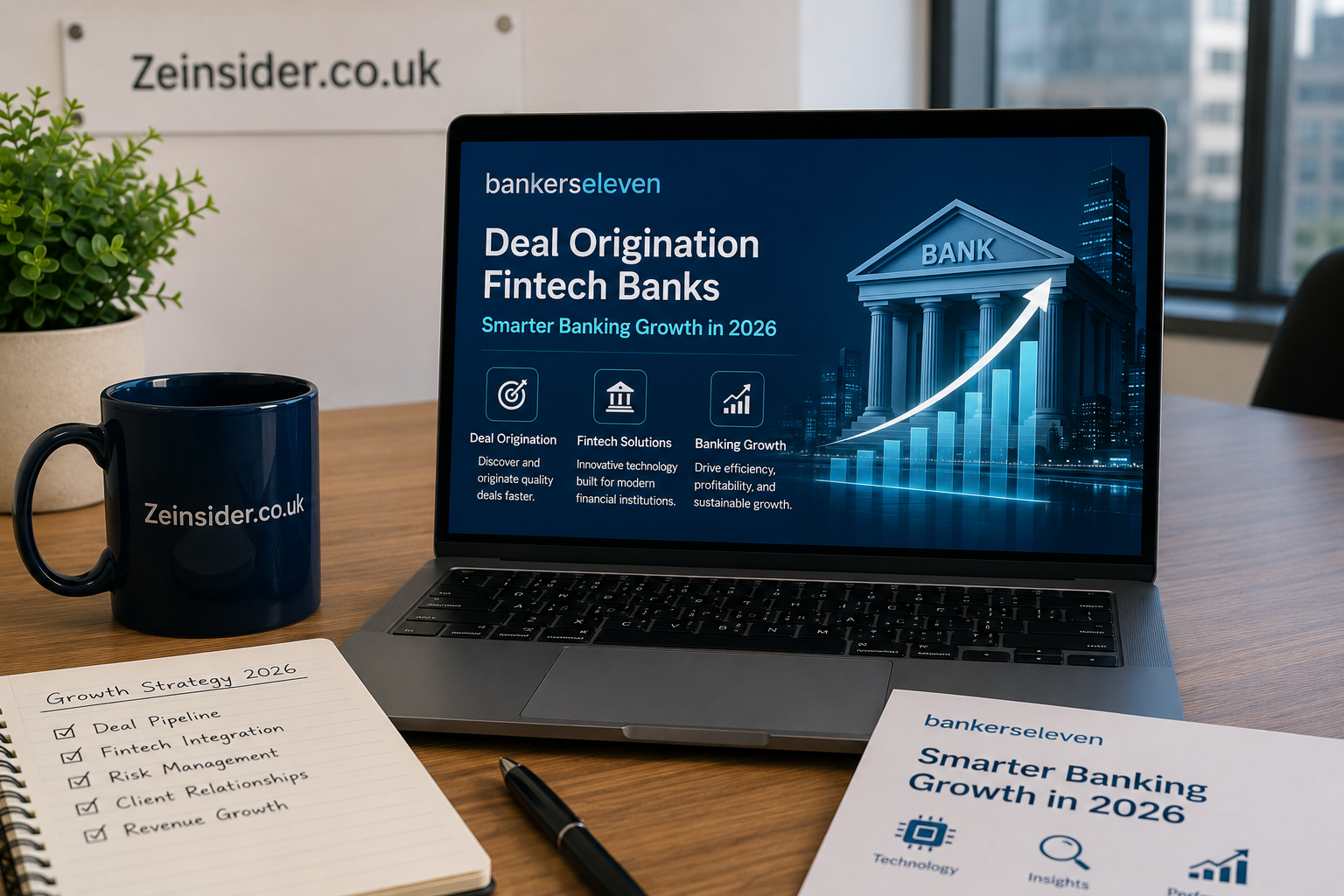
The financial services industry has changed dramatically over the past few years, forcing banks to rethink how they discover, evaluate, and manage new business opportunities. Traditional spreadsheets, disconnected CRM systems, and manual workflows are no longer enough to compete in today’s fast-moving banking environment. This is where bankerseleven deal origination fintech banks solutions have gained significant attention. Financial institutions increasingly rely on digital platforms that simplify relationship management, commercial lending, and deal sourcing while improving collaboration across departments. These modern solutions help banks reduce operational inefficiencies and respond to customer needs much faster. Instead of spending valuable hours searching for opportunities, bankers can focus on building stronger client relationships and closing profitable deals. As fintech innovation continues to reshape commercial banking, understanding how these platforms work has become essential for executives, relationship managers, lenders, and financial advisors alike.
Quick Answer
Bankerseleven deal origination fintech banks refers to a fintech-driven approach that enables banks to manage deal sourcing, customer relationships, commercial lending opportunities, pipeline tracking, and collaboration from a centralized platform. It improves efficiency, enhances decision-making through data insights, reduces manual work, and helps financial institutions originate, qualify, and close more profitable banking deals while maintaining regulatory compliance.
Understanding bankerseleven Deal Origination Fintech Banks
What Is Deal Origination in Modern Banking?
Deal origination is the process banks use to identify, develop, qualify, and convert new business opportunities into profitable financial relationships. In commercial banking, this includes finding new lending opportunities, investment prospects, mergers and acquisitions support, treasury services, and corporate financing solutions. Traditionally, relationship managers relied heavily on personal networks, referrals, spreadsheets, emails, and manual reporting. However, these methods often created fragmented information and inconsistent customer experiences. Today, bankerseleven deal origination fintech banks platforms centralize every stage of the opportunity lifecycle, allowing institutions to track prospects from initial contact to successful transaction completion. This digital transformation provides greater visibility into pipelines while helping teams collaborate across multiple departments. Better transparency also enables management to forecast revenue more accurately and allocate resources efficiently. Ultimately, fintech-powered deal origination helps banks build stronger customer relationships while increasing operational performance.
Why Digital Transformation Matters
Digital transformation has become a strategic priority rather than a competitive advantage. Customers expect faster responses, personalized financial products, and seamless digital experiences across every interaction. Banks that continue relying on outdated systems often struggle with delayed approvals, inconsistent data, and limited visibility into customer opportunities. Bankerseleven deal origination fintech banks solutions address these challenges by integrating customer information, opportunity tracking, workflow automation, and analytics into a unified platform. This enables bankers to spend less time on administrative tasks and more time delivering value to clients. Automation also reduces human error while ensuring compliance requirements are consistently followed. Improved reporting helps leadership identify emerging trends and adjust growth strategies quickly. As banking competition intensifies, institutions embracing fintech are better positioned to meet evolving customer expectations.
The Evolution of Deal Origination Technology
From Manual Processes to Intelligent Platforms
Commercial banking once depended almost entirely on human relationships and paper-based documentation. Relationship managers kept handwritten notes, maintained local spreadsheets, and communicated opportunities through emails or phone calls. While personal connections remain valuable, these methods no longer support the scale and speed required by today’s financial markets. Modern bankerseleven deal origination fintech banks platforms consolidate client information, communication history, opportunity status, risk indicators, and financial insights into one secure environment. Artificial intelligence, predictive analytics, workflow automation, and cloud computing further enhance decision-making capabilities. These technologies eliminate repetitive administrative work while improving collaboration across lending, compliance, operations, and executive teams. As a result, financial institutions gain greater efficiency without sacrificing relationship quality. Digital transformation ultimately enables smarter banking rather than replacing human expertise.
Key Milestones in Banking Technology
| Banking Era | Primary Process | Major Challenge | Fintech Improvement |
|---|---|---|---|
| Traditional Banking | Paper files | Slow processing | Digital records |
| Early CRM Adoption | Customer databases | Limited integration | Unified customer profiles |
| Cloud Banking | Centralized access | Security concerns | Enterprise-grade protection |
| AI Banking | Predictive insights | Data quality | Intelligent automation |
| Modern Deal Origination | End-to-end workflow | Complex coordination | Centralized fintech platform |
Core Components of Bankerseleven Deal Origination Platforms
Customer Relationship Management
Relationship management sits at the heart of every successful banking organization. Financial institutions thrive when they understand customer needs, anticipate opportunities, and maintain long-term trust. Bankerseleven deal origination fintech banks platforms combine CRM functionality with banking-specific workflows to create a complete customer profile. Relationship managers can view previous interactions, current financial products, pending opportunities, and strategic recommendations within a single dashboard. This comprehensive visibility allows teams to deliver more personalized financial advice while identifying cross-selling and upselling opportunities. Strong CRM capabilities also improve collaboration because every department accesses consistent customer information. Enhanced communication strengthens client satisfaction while reducing duplicate work. Over time, these improvements contribute to higher customer retention and increased revenue growth.
Pipeline Management
Pipeline management gives banking teams a real-time overview of every opportunity progressing through the sales lifecycle. Rather than guessing which deals require attention, managers can monitor activity using customizable dashboards and automated reporting. Bankerseleven deal origination fintech banks systems categorize opportunities based on probability, value, stage, and expected closing date. This structured approach improves forecasting accuracy while helping leadership prioritize high-value opportunities. Automated reminders ensure follow-ups happen on schedule, reducing the likelihood of missed business opportunities. Teams can also identify bottlenecks before they negatively impact performance. Better visibility creates accountability throughout the organization and supports more effective resource allocation.
Workflow Automation
Automation eliminates repetitive administrative work that traditionally consumed valuable banking resources. Instead of manually assigning tasks, sending reminder emails, or updating spreadsheets, automated workflows complete these processes instantly. Bankerseleven deal origination fintech banks solutions streamline document approvals, compliance reviews, customer onboarding, and internal notifications without sacrificing quality or security. Employees spend less time on routine tasks and more time serving clients. Automation also standardizes procedures across departments, ensuring consistent execution regardless of team size. Faster workflows improve customer satisfaction while reducing operational costs. Financial institutions benefit from increased productivity alongside stronger regulatory compliance.
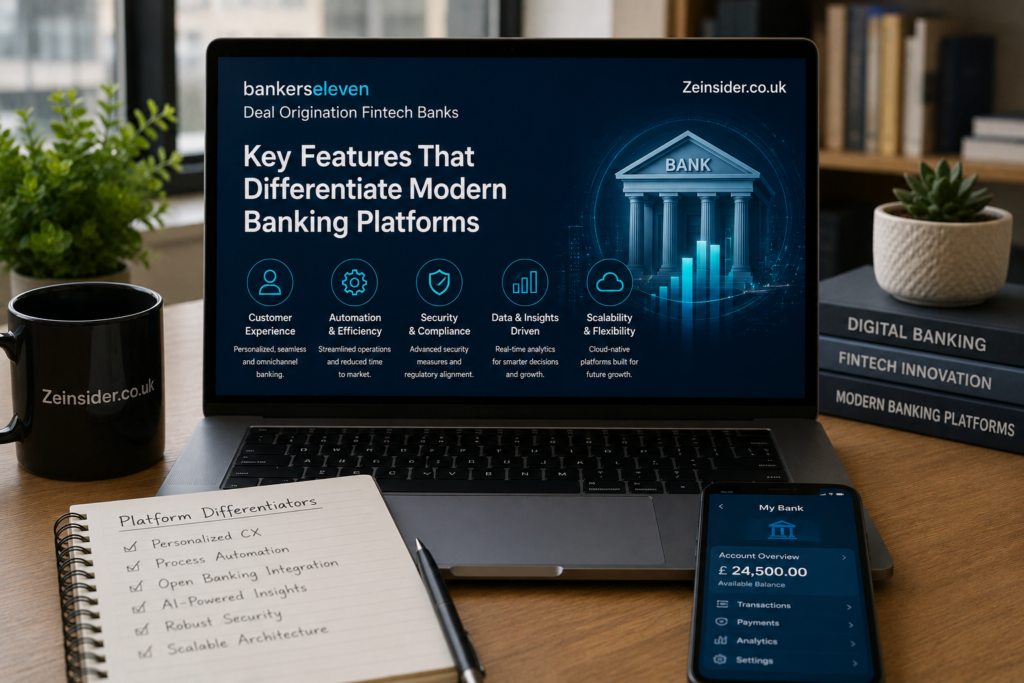
Key Features That Differentiate Modern Banking Platforms
Centralized Data Management
One of the biggest obstacles facing financial institutions is fragmented data spread across multiple systems. Customer records may exist in CRM software, lending applications, spreadsheets, email conversations, and document repositories simultaneously. This fragmentation creates duplicate information, inconsistent reporting, and delayed decision-making. Bankerseleven deal origination fintech banks platforms solve this issue by centralizing all critical business information into one secure environment. Every authorized employee accesses the same up-to-date customer data regardless of department or location. Centralized information reduces errors while improving collaboration across commercial banking teams. Decision-makers gain confidence because reports reflect accurate, real-time information. Strong data governance also strengthens compliance and operational resilience.
Integrated Analytics
Advanced analytics transform raw banking data into actionable business intelligence. Rather than simply storing information, bankerseleven deal origination fintech banks platforms analyze customer behavior, pipeline performance, revenue forecasts, relationship trends, and operational efficiency. Interactive dashboards present these insights through visual reports that support strategic planning. Managers can quickly identify underperforming opportunities while recognizing emerging market trends. Predictive analytics also assists with resource allocation and customer prioritization. Better visibility enables institutions to make informed decisions instead of relying on assumptions. Data-driven strategies consistently outperform intuition alone in today’s competitive financial environment.
Collaboration Across Departments
Commercial banking rarely involves a single employee. Successful transactions require cooperation between relationship managers, credit analysts, compliance officers, operations teams, executives, and customer support professionals. Bankerseleven deal origination fintech banks platforms create collaborative workspaces where every stakeholder can securely access relevant information. Shared notes, task assignments, document management, and communication histories eliminate information silos. Teams remain aligned throughout every stage of the opportunity lifecycle. Faster collaboration improves response times while minimizing misunderstandings. Ultimately, customers experience smoother service because departments work together more efficiently.
Benefits for Financial Institutions
Improving Operational Efficiency
Operational efficiency remains one of the strongest reasons banks invest in fintech solutions. Manual data entry, disconnected systems, and repetitive administrative tasks increase costs while slowing customer service. Bankerseleven deal origination fintech banks technology streamlines operations by automating workflows, integrating customer information, and improving reporting accuracy. Employees complete tasks faster because they spend less time searching for information or updating multiple systems. Leadership benefits from better visibility into performance metrics and operational bottlenecks. Improved efficiency also allows institutions to scale without proportionally increasing staffing requirements. These advantages create stronger profitability while enhancing customer experiences. Digital banking operations ultimately become more agile and responsive.
Better Customer Experiences
Customers expect banks to deliver personalized, timely, and transparent financial services. Long approval times and inconsistent communication often lead clients to seek alternative providers. Bankerseleven deal origination fintech banks platforms support faster responses by providing relationship managers with complete customer insights and automated workflow capabilities. Personalized recommendations become easier because bankers understand each client’s financial profile and previous interactions. Improved communication builds trust while encouraging long-term relationships. Customers also appreciate faster loan processing, proactive updates, and simplified documentation requirements. Better service quality contributes directly to customer loyalty and business growth.
Security and Regulatory Compliance in Modern Banking
Security is one of the most important considerations when implementing bankerseleven deal origination fintech banks solutions. Financial institutions manage highly sensitive customer information, confidential business records, and financial transactions that must remain protected against cyber threats. Modern fintech platforms are designed with enterprise-grade security measures such as encryption, multi-factor authentication, role-based access controls, and continuous monitoring. These protections help minimize unauthorized access while maintaining customer trust. Regulatory compliance is equally important because banks operate under strict financial regulations that vary across jurisdictions. Built-in audit trails make it easier to demonstrate compliance during regulatory reviews and internal audits. Automated documentation also reduces the likelihood of human error and ensures records remain complete and accurate. By combining security and compliance into a unified platform, banks can confidently expand digital operations while protecting customer data.
Data Protection Features
Effective data protection extends beyond basic cybersecurity practices. Bankerseleven deal origination fintech banks platforms often include automated backups, disaster recovery planning, secure cloud hosting, and advanced permission settings to safeguard business continuity. Encryption protects information both during storage and while data travels across networks. Regular vulnerability assessments help identify potential weaknesses before they become security incidents. Financial institutions can also establish customized access rules so employees only view information relevant to their responsibilities. These layered security controls reduce organizational risk while supporting regulatory requirements. Strong governance frameworks further improve confidence among customers, regulators, and business partners. As cyber threats continue evolving, proactive security remains an essential investment rather than an optional feature.
Integration with Existing Banking Systems
Connecting Multiple Financial Technologies
Modern banks rarely operate with a single software solution. Instead, they depend on numerous systems for customer relationship management, loan processing, accounting, treasury services, compliance monitoring, and digital banking. Bankerseleven deal origination fintech banks platforms provide integration capabilities that connect these technologies into a unified workflow. Rather than forcing employees to switch between disconnected applications, integrations synchronize information automatically. This improves data consistency while reducing duplicate entry and administrative workload. API-based connectivity also enables banks to expand technology ecosystems without replacing every existing system. Better interoperability supports faster innovation while protecting previous technology investments. Seamless integrations ultimately create a more efficient banking environment for both employees and customers.
Common Banking Integrations
| Integration Area | Business Purpose | Benefit |
|---|---|---|
| CRM Systems | Customer management | Unified client profiles |
| Loan Origination Software | Lending workflows | Faster approvals |
| Core Banking Platform | Account management | Real-time information |
| Document Management | Secure file storage | Improved collaboration |
| Business Intelligence Tools | Reporting and analytics | Better strategic planning |
| Compliance Systems | Regulatory monitoring | Reduced operational risk |
Measuring Success After Implementation
Key Performance Indicators
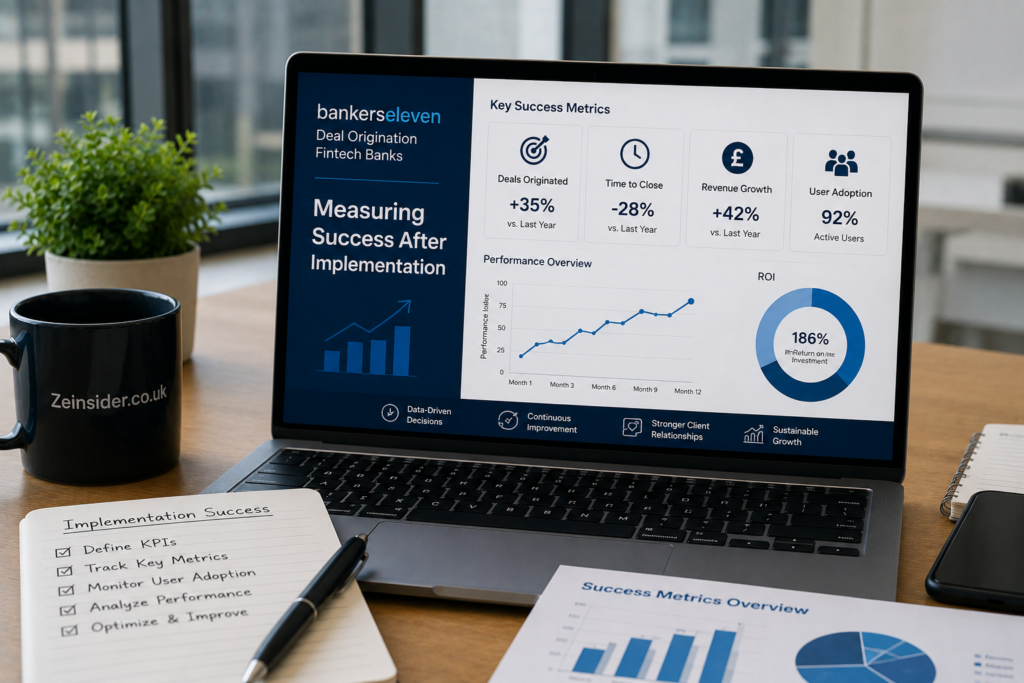
Implementing bankerseleven deal origination fintech banks technology should deliver measurable business improvements rather than simply introducing new software. Banks typically monitor key performance indicators (KPIs) to evaluate success over time. These metrics include deal conversion rates, pipeline growth, customer acquisition, average approval times, employee productivity, revenue generated per relationship manager, and customer retention. Tracking these indicators helps leadership identify strengths as well as areas requiring further optimization. Performance dashboards allow executives to monitor trends in real time instead of relying solely on monthly reports. Continuous measurement also supports data-driven decision-making across departments. Organizations that regularly evaluate KPIs are better equipped to maximize return on investment. Long-term success depends on combining technology adoption with ongoing performance improvement initiatives.
Performance Metrics Comparison
| KPI | Before Digital Platform | After Digital Platform |
|---|---|---|
| Pipeline Visibility | Limited | Comprehensive |
| Manual Data Entry | High | Significantly Reduced |
| Customer Response Time | Slower | Faster |
| Cross-Team Collaboration | Fragmented | Centralized |
| Forecast Accuracy | Moderate | Improved |
| Opportunity Tracking | Manual | Automated |
Future Trends Shaping Deal Origination Fintech
Artificial Intelligence and Predictive Analytics
Artificial intelligence continues transforming the future of bankerseleven deal origination fintech banks solutions. AI-powered algorithms can identify potential business opportunities by analyzing customer behavior, transaction history, industry trends, and financial performance. Predictive analytics also helps relationship managers prioritize prospects with the highest probability of success. Instead of manually reviewing thousands of records, intelligent systems recommend the most valuable opportunities automatically. AI additionally supports fraud detection, risk assessment, and customer segmentation, making banking operations more efficient and secure. As machine learning models improve over time, recommendations become increasingly accurate. Banks adopting these technologies gain stronger competitive positioning while improving customer experiences. Human expertise remains essential, but AI serves as a powerful decision-support tool.
Cloud-Based Innovation
Cloud computing has become a cornerstone of fintech modernization. Cloud-based bankerseleven deal origination fintech banks platforms provide scalability, flexibility, and accessibility that traditional on-premises infrastructure often cannot match. Employees can securely access information from multiple locations while maintaining consistent collaboration. Cloud infrastructure also simplifies software updates, allowing institutions to benefit from new features without lengthy deployment cycles. High availability and disaster recovery capabilities further strengthen operational resilience. Financial institutions increasingly recognize that cloud adoption accelerates innovation while lowering infrastructure management costs. Combined with strong cybersecurity practices, cloud technology supports sustainable long-term digital transformation.
How Banks Can Maximize Platform Value
Building a Strong Adoption Strategy
Technology investments deliver results only when employees actively embrace new workflows. Banks should establish structured onboarding programs that help staff understand platform capabilities and business benefits. Training should include practical scenarios relevant to relationship managers, lending officers, executives, and compliance teams. Leadership support plays a critical role because employees are more likely to adopt new systems when executives actively promote digital transformation. Regular feedback sessions also identify usability improvements and additional training opportunities. Encouraging collaboration across departments ensures everyone follows standardized processes. Continuous optimization keeps the platform aligned with changing business objectives. Successful adoption transforms software into a strategic business asset rather than another isolated technology project.
Encouraging Continuous Improvement
Digital transformation is not a one-time initiative. Financial institutions should regularly evaluate workflows, automation opportunities, reporting needs, and customer expectations. Continuous improvement enables bankerseleven deal origination fintech banks platforms to evolve alongside organizational growth. Employee feedback often reveals opportunities for process refinement that management may overlook. Banks should periodically review KPIs and customer satisfaction metrics to measure ongoing progress. Updating workflows based on operational insights ensures technology remains relevant as business requirements change. A culture of continuous learning encourages innovation while supporting long-term competitiveness. Organizations that adapt consistently are better prepared for future industry changes.
Best Practices
- Define clear business objectives before implementing bankerseleven deal origination fintech banks solutions.
- Standardize deal origination workflows across all banking departments.
- Keep customer information accurate and consistently updated.
- Train employees regularly on new platform features and compliance requirements.
- Integrate fintech platforms with existing banking systems whenever possible.
- Monitor KPIs continuously to measure business outcomes.
- Strengthen cybersecurity through multi-layered protection strategies.
- Use analytics to identify new revenue opportunities and customer needs.
- Encourage collaboration between relationship managers, lending teams, and compliance officers.
- Review workflows periodically to ensure continuous improvement.
Common Mistakes
| Mistake | Business Impact | Better Approach |
|---|---|---|
| Poor employee training | Low adoption rates | Provide ongoing education |
| Ignoring data quality | Inaccurate reporting | Maintain clean customer data |
| Limited executive support | Slow transformation | Secure leadership commitment |
| No KPI tracking | Difficult ROI measurement | Monitor measurable outcomes |
| Weak integration planning | Information silos | Connect existing systems |
| Delaying security updates | Increased cyber risk | Maintain proactive security |
Pro Tips
Prioritize User Adoption
Even the most advanced bankerseleven deal origination fintech banks platform cannot produce results if employees avoid using it. Invest in practical training, leadership engagement, and ongoing support to maximize adoption across departments.
Focus on Customer Relationships
Technology should strengthen—not replace—personal banking relationships. Use automation to eliminate repetitive work while allowing bankers to spend more time delivering personalized financial advice and building client trust.
Leverage Analytics for Strategic Growth
Analyze customer trends, pipeline performance, and conversion metrics regularly. Data-driven insights help identify high-value opportunities, optimize resources, and improve long-term business planning.
Continuously Optimize Processes
Review workflows periodically to identify bottlenecks and automation opportunities. Continuous refinement ensures fintech investments continue delivering measurable value as customer expectations evolve.
Conclusion
The rapid evolution of digital banking has made bankerseleven deal origination fintech banks solutions increasingly valuable for financial institutions seeking sustainable growth. By combining relationship management, workflow automation, analytics, security, compliance, and collaboration into a unified platform, banks can modernize operations while improving customer experiences. These solutions reduce manual work, enhance decision-making, and provide greater visibility into every stage of the deal origination lifecycle. As competition within financial services continues to increase, organizations that embrace fintech innovation will be better equipped to identify opportunities, strengthen client relationships, and improve operational efficiency. Successful implementation depends on strong leadership, employee adoption, high-quality data, and continuous optimization rather than technology alone. Institutions that combine these elements create a resilient foundation for long-term success in an increasingly digital financial landscape.
Frequently Asked Questions
1. What is bankerseleven deal origination fintech banks?
It refers to fintech-enabled solutions that help banks identify, manage, track, and close commercial banking opportunities through centralized digital workflows.
2. Who benefits from these platforms?
Commercial banks, regional banks, relationship managers, lending teams, executives, compliance officers, and financial advisors all benefit from improved efficiency and collaboration.
3. How does fintech improve deal origination?
Fintech automates repetitive tasks, centralizes customer information, improves reporting, enhances collaboration, and accelerates decision-making.
4. Is security a major feature?
Yes. Modern platforms typically include encryption, access controls, audit trails, multi-factor authentication, and compliance monitoring to protect sensitive financial information.
5. Can these platforms integrate with existing banking software?
Yes. Many solutions support API integrations with CRM systems, loan origination software, core banking platforms, analytics tools, and document management systems.
6. Why is pipeline visibility important?
Pipeline visibility allows managers to monitor opportunities, forecast revenue more accurately, prioritize high-value deals, and improve resource allocation.
7. Does artificial intelligence play a role?
Yes. AI assists with predictive analytics, opportunity identification, customer segmentation, fraud detection, and smarter business recommendations.
8. What should banks measure after implementation?
Banks should monitor KPIs such as deal conversion rates, customer acquisition, response times, productivity, revenue growth, and customer retention.
9. What are the biggest implementation challenges?
Common challenges include poor employee adoption, inconsistent data quality, limited executive support, inadequate integration planning, and insufficient training.
10. How can banks maximize long-term value?
Banks should continuously optimize workflows, invest in employee training, monitor business metrics, maintain strong cybersecurity practices, and leverage analytics for strategic decision-making.
Author Bio
Author
The author is a fintech and digital banking content specialist with extensive experience researching financial technology, commercial banking innovation, enterprise software, and digital transformation strategies. Their work focuses on creating accurate, SEO-optimized, EEAT-compliant content that helps banking professionals, technology leaders, and business decision-makers understand complex financial technologies through practical, research-driven insights.