
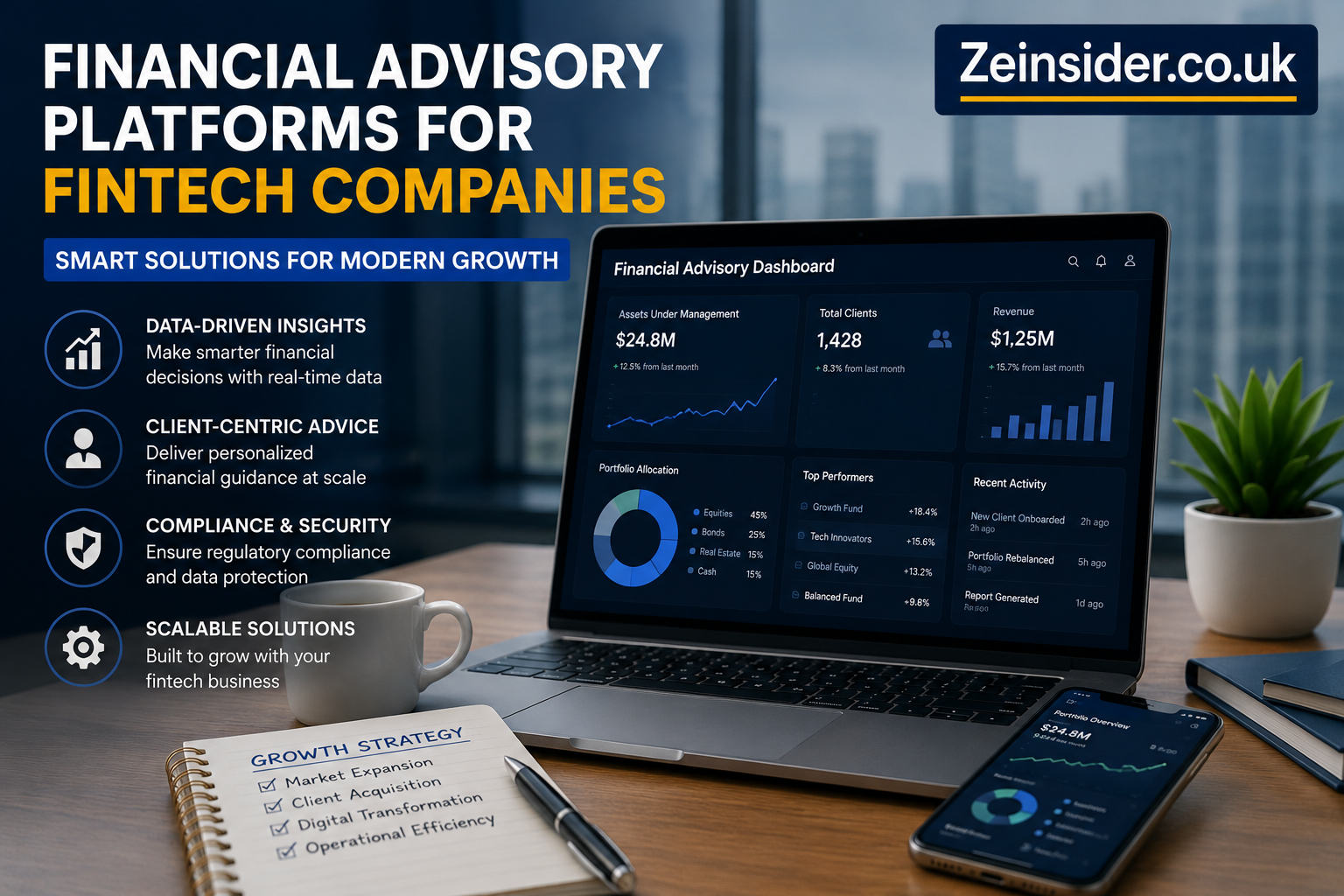
The fintech industry continues to reshape how businesses and consumers interact with financial services. As competition increases, companies need more than innovative products to succeed—they also require smarter financial planning, accurate forecasting, stronger compliance, and data-driven decision-making. This is where financial advisory platforms for fintech companies have become increasingly valuable. These modern platforms combine financial analytics, reporting, budgeting, investment insights, and regulatory support into a centralized environment that helps organizations make confident strategic decisions. Whether a startup is preparing for funding or an established fintech company is expanding internationally, selecting the right advisory platform can significantly improve operational efficiency and financial performance. Businesses are also looking for automation, AI-powered forecasting, cash flow optimization, and investor reporting capabilities that reduce manual work. As digital finance evolves, financial advisory technology is becoming an essential component of every successful fintech ecosystem. Understanding how these platforms work is the first step toward choosing the best solution for long-term growth.
Quick Answer
Financial advisory platforms for fintech companies are software solutions designed to help fintech businesses manage financial planning, investment analysis, compliance, budgeting, forecasting, reporting, and strategic decision-making. They combine financial intelligence with automation and analytics to improve efficiency, reduce risks, support fundraising efforts, optimize cash flow, and provide real-time insights for executives, investors, and financial teams. Modern advisory platforms often integrate with accounting software, banking systems, payment infrastructure, CRM platforms, and enterprise resource planning (ERP) solutions, making them valuable tools for fintech organizations of every size.
What Are Financial Advisory Platforms for Fintech Companies?
Financial advisory platforms for fintech companies are specialized software ecosystems that help organizations manage every aspect of financial strategy from a centralized dashboard. Unlike traditional accounting software that focuses primarily on bookkeeping, advisory platforms provide deeper business intelligence by combining budgeting, forecasting, investment planning, financial reporting, compliance monitoring, and operational analytics. They help executives understand where money is being spent, identify opportunities for growth, monitor financial health, and make informed strategic decisions backed by real-time data. These platforms are widely used by digital banks, payment processors, lending companies, wealth management startups, embedded finance providers, and blockchain businesses. Many solutions also include predictive analytics powered by artificial intelligence that enables organizations to anticipate future financial scenarios rather than simply reviewing historical performance. As fintech regulations continue evolving, these platforms also simplify compliance management by maintaining detailed audit trails and regulatory documentation. Their ability to centralize financial operations improves collaboration between finance teams, executives, investors, and external advisors. Ultimately, financial advisory platforms transform financial management from a reactive process into a proactive business strategy.
How They Differ from Traditional Financial Software
Traditional accounting software focuses on recording financial transactions and preparing tax documentation. Financial advisory platforms, however, extend far beyond bookkeeping by delivering strategic insights that help leadership teams make long-term business decisions. These platforms often include financial modeling, scenario planning, revenue forecasting, fundraising analysis, investment tracking, board reporting, KPI monitoring, and profitability analysis within one unified environment. Instead of simply producing financial statements, they actively support decision-making through advanced analytics and customizable dashboards. Fintech businesses operating in rapidly changing markets require agile tools capable of adapting to fluctuating revenue streams, regulatory updates, and investor expectations. Financial advisory platforms satisfy these needs through automation and intelligent reporting capabilities. They also integrate with multiple fintech applications, creating a complete financial ecosystem that improves operational visibility. This strategic approach makes advisory platforms increasingly valuable compared to standalone accounting systems.
Why Fintech Companies Need Financial Advisory Platforms
The financial services industry changes rapidly due to evolving regulations, technological innovation, changing customer expectations, and competitive market dynamics. Fintech companies often experience accelerated growth that introduces financial complexity difficult to manage using spreadsheets alone. Financial advisory platforms help businesses maintain visibility into cash flow, funding requirements, operating expenses, profitability, and investment opportunities through automated reporting and real-time analytics. They support financial planning while reducing manual processes that consume valuable employee time. Executive teams gain access to performance metrics that improve strategic planning and resource allocation across departments. Investors also appreciate transparent reporting generated by advisory platforms because it strengthens confidence in organizational governance and financial management. Additionally, these platforms help organizations remain compliant with financial regulations while minimizing operational risks. As a result, fintech companies can focus more on innovation and customer experience rather than administrative financial tasks.
Business Challenges They Solve
Financial Visibility
Growing fintech businesses often manage multiple revenue streams across subscriptions, payment processing fees, lending operations, and investment products. Financial advisory platforms consolidate these data sources into comprehensive dashboards that provide executives with immediate visibility into overall financial performance.
Regulatory Compliance
Compliance remains one of the largest challenges facing fintech organizations. Advisory platforms automate reporting requirements, monitor regulatory changes, maintain documentation, and simplify audit preparation to reduce compliance risks.
Investment Planning
Many fintech startups depend on venture capital or institutional investment. Financial advisory platforms generate accurate forecasts, valuation models, and investor-ready financial reports that support fundraising discussions and long-term capital planning.
Strategic Decision-Making
Instead of relying on assumptions, executives can evaluate business scenarios using predictive financial models, sensitivity analysis, and performance benchmarking. These capabilities improve decision quality while reducing financial uncertainty.
Core Features of Modern Financial Advisory Platforms
Modern financial advisory platforms include comprehensive capabilities that extend well beyond standard accounting functionality. One of their most valuable features is real-time financial reporting that automatically updates dashboards using live operational data. Budgeting and forecasting modules allow organizations to compare actual performance against planned objectives while identifying emerging trends before they become major issues. Scenario planning tools enable executives to evaluate different growth strategies and understand their financial impact before implementation. Cash flow management features help businesses monitor liquidity, optimize working capital, and anticipate funding requirements months in advance. Compliance monitoring ensures organizations remain aligned with evolving financial regulations while maintaining detailed audit records. Many platforms also include customizable executive dashboards that present critical KPIs through intuitive visualizations suitable for leadership teams and investors. Artificial intelligence further enhances these capabilities by identifying anomalies, predicting revenue patterns, and recommending financial optimization opportunities. Together, these features enable fintech organizations to make faster, more informed business decisions.
Essential Platform Capabilities
| Feature | Business Benefit |
|---|---|
| Financial Forecasting | Predict future revenue and expenses |
| Budget Planning | Improve financial discipline |
| Compliance Monitoring | Reduce regulatory risks |
| Investor Reporting | Increase transparency |
| Cash Flow Analytics | Improve liquidity management |
| KPI Dashboards | Better executive decision-making |
| AI Forecasting | More accurate business predictions |
| Risk Assessment | Identify financial threats early |
How Financial Advisory Platforms Support Business Growth
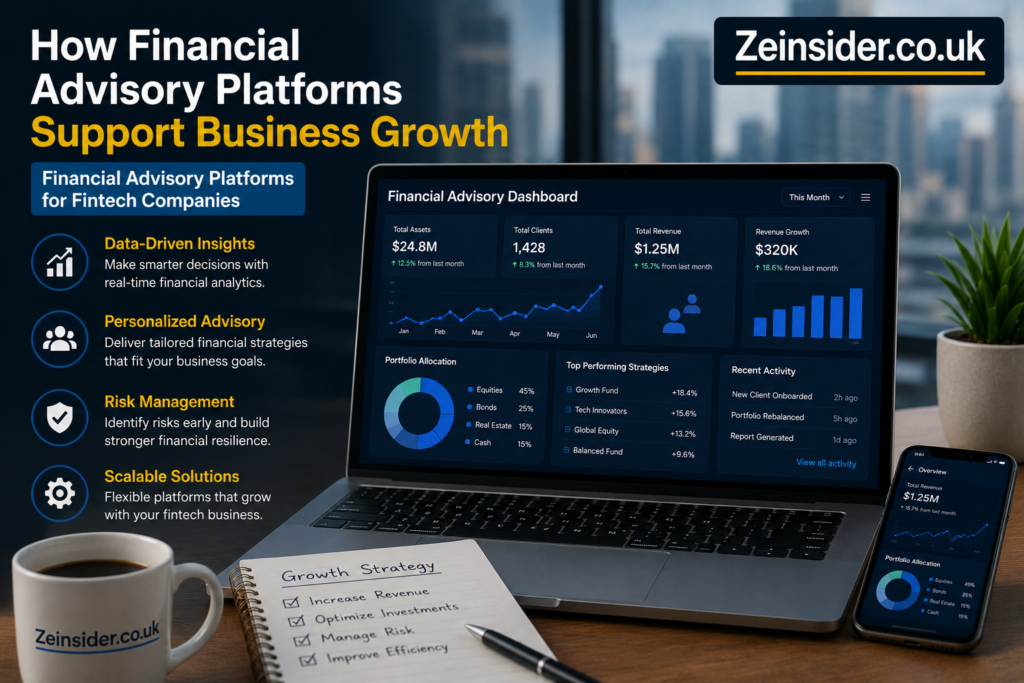
Business growth creates increasingly complex financial challenges that require more sophisticated management systems. Financial advisory platforms support expansion by providing accurate forecasts that help leadership teams allocate resources efficiently while minimizing unnecessary spending. Organizations entering new markets benefit from scenario analysis that estimates financial outcomes before major investments occur. Cash flow forecasting reduces the likelihood of liquidity shortages while supporting sustainable expansion strategies. Executive dashboards also improve organizational alignment because department leaders gain access to consistent financial metrics and performance indicators. Investors frequently expect detailed financial reporting throughout funding rounds, and advisory platforms automate much of this process by generating standardized reports quickly and accurately. Risk management capabilities further strengthen business resilience by identifying financial vulnerabilities before they impact operations. By integrating planning, reporting, forecasting, compliance, and analytics into one platform, fintech businesses gain a stronger foundation for long-term success and scalable growth.
Benefits for Different Business Stages
Early-Stage Fintech Startups
Startup companies benefit from budgeting tools, fundraising support, financial forecasting, burn-rate monitoring, and investor reporting that help establish financial discipline while preparing for future investment opportunities.
Scaling Fintech Businesses
Growing companies require deeper analytics, workforce planning, revenue optimization, operational reporting, and financial controls that support expanding customer bases and increasing transaction volumes.
Enterprise Fintech Organizations
Large fintech enterprises use advisory platforms for multinational reporting, regulatory compliance management, enterprise forecasting, board reporting, treasury management, and advanced business intelligence.
Types of Financial Advisory Platforms Used in Fintech
Not every fintech company requires the same type of financial advisory solution because business models differ significantly across the industry. Payment companies prioritize transaction analytics, while lending platforms focus heavily on credit portfolio performance and risk management. Digital banks often require enterprise-scale financial planning systems capable of handling regulatory reporting across multiple jurisdictions. Wealth management firms seek investment analytics and client portfolio reporting tools, whereas embedded finance providers emphasize API connectivity and scalable financial infrastructure. Cloud-based advisory platforms remain the most popular choice because they offer flexibility, automatic software updates, remote accessibility, and lower infrastructure costs. Some organizations choose specialized fintech financial management software, while others implement enterprise performance management platforms customized for financial services. Selecting the appropriate platform depends on organizational size, compliance requirements, transaction volume, reporting complexity, and long-term strategic goals. Understanding these categories helps businesses identify solutions aligned with their operational priorities.
Common Platform Categories
Cloud Financial Advisory Platforms
These solutions provide subscription-based access, automatic updates, scalability, remote collaboration, and seamless integrations with modern fintech applications.
Enterprise Financial Planning Platforms
Enterprise solutions support complex forecasting, budgeting, governance, risk management, and board-level reporting for larger financial organizations.
AI-Powered Advisory Platforms
Artificial intelligence improves forecasting accuracy, automates financial analysis, detects anomalies, and delivers predictive insights for strategic planning.
AI and Automation in Financial Advisory Platforms
Artificial intelligence has become one of the most influential technologies shaping financial advisory platforms for fintech companies. Instead of relying solely on historical reports, AI enables organizations to predict future outcomes using machine learning algorithms, behavioral analytics, and real-time financial data. These intelligent systems continuously analyze transaction patterns, customer activity, operational expenses, and revenue streams to identify trends that might otherwise remain unnoticed. Automation further reduces repetitive manual work by generating reports, reconciling accounts, monitoring compliance requirements, and sending alerts when financial thresholds are exceeded. This allows finance teams to dedicate more time to strategic planning instead of administrative tasks. AI-powered recommendations also help executives optimize pricing strategies, improve cash flow, and allocate resources more efficiently. As fintech businesses scale, automation ensures financial processes remain accurate and consistent without requiring proportional increases in staffing. Companies adopting intelligent advisory technology often experience faster decision-making, stronger operational efficiency, and improved financial resilience in competitive markets.
AI Features Driving Better Financial Decisions
Predictive Revenue Forecasting
Machine learning models evaluate historical performance alongside current business conditions to estimate future revenue with greater accuracy. These forecasts help organizations prepare budgets, hiring plans, and investment strategies while reducing uncertainty.
Intelligent Risk Detection
AI continuously monitors financial transactions and operational metrics to identify unusual patterns that may indicate fraud, compliance issues, or financial instability. Early detection allows organizations to respond before small problems become significant risks.
Automated Financial Reporting
Instead of spending hours compiling spreadsheets, finance teams can automatically generate customized reports for executives, investors, and regulatory agencies using real-time financial data.
Personalized Business Recommendations
Advanced advisory platforms analyze organizational performance and recommend cost reductions, investment opportunities, pricing adjustments, and operational improvements based on predictive analytics.
Essential Integrations for Fintech Businesses
Financial advisory platforms deliver maximum value when they integrate seamlessly with the broader fintech technology ecosystem. Modern organizations rely on numerous software applications to manage payments, accounting, customer relationships, payroll, taxation, banking, and enterprise operations. Without proper integration, finance teams often struggle with duplicate data entry, inconsistent reporting, and fragmented business intelligence. Advisory platforms eliminate these challenges by synchronizing information across connected systems in real time. Integration also improves reporting accuracy because every department works from the same financial dataset rather than maintaining separate records. Cloud connectivity allows executives to monitor financial performance regardless of location while ensuring stakeholders always access the latest information. Many advisory platforms also provide APIs that simplify custom integrations with proprietary fintech solutions. A well-connected financial infrastructure ultimately supports faster decision-making, stronger governance, and improved customer service across the organization.
Common Software Integrations
| Integration | Purpose | Business Value |
|---|---|---|
| Accounting Software | Financial records | Accurate bookkeeping |
| ERP Systems | Enterprise operations | Unified business management |
| CRM Platforms | Customer insights | Revenue forecasting |
| Banking APIs | Banking transactions | Real-time financial visibility |
| Payment Gateways | Transaction monitoring | Improved cash flow tracking |
| Payroll Systems | Employee compensation | Simplified workforce planning |
| Tax Software | Tax preparation | Compliance efficiency |
| Business Intelligence Tools | Data visualization | Executive reporting |
How to Choose the Right Financial Advisory Platform for Your Fintech Company
Selecting among various financial advisory platforms for fintech companies requires evaluating both current operational needs and future business objectives. Organizations should begin by identifying their biggest financial challenges, whether those involve budgeting, forecasting, investor reporting, compliance management, or cash flow optimization. Scalability should remain a top consideration because the platform must continue supporting the business as transaction volumes and customer numbers increase. Decision-makers should also examine integration capabilities since compatibility with existing accounting software, banking infrastructure, and CRM systems significantly improves efficiency. Security features deserve equal attention because fintech businesses handle highly sensitive financial information that requires encryption, access controls, and regulatory compliance. Vendor reputation, customer support quality, implementation services, and ongoing software updates also contribute to long-term success. Comparing total ownership costs rather than subscription fees alone provides a more accurate understanding of overall investment value. By following a structured evaluation process, organizations can select a platform that supports sustainable growth while maximizing operational performance.
Evaluation Checklist
Business Requirements
Clearly define financial goals, reporting needs, compliance obligations, and growth expectations before evaluating software vendors.
Security Standards
Choose platforms that offer advanced encryption, multi-factor authentication, audit logs, and compliance with industry regulations.
Scalability
Ensure the platform can accommodate increasing transaction volumes, expanding teams, and international operations without requiring major system replacements.
User Experience
Finance professionals should be able to navigate dashboards, generate reports, and perform analysis efficiently with minimal training.
Financial Advisory Platforms vs Traditional Financial Consulting
Although both approaches support financial decision-making, they differ considerably in how services are delivered and how organizations benefit. Traditional consultants provide personalized expertise through meetings, strategic recommendations, and periodic financial reviews, while advisory platforms continuously monitor business performance through automated analytics and reporting. Many fintech companies now combine both methods by using software for day-to-day financial management while engaging consultants for specialized projects such as mergers, acquisitions, fundraising, or regulatory restructuring. Digital platforms offer faster access to financial insights because information updates automatically rather than waiting for scheduled consultations. Automation also reduces operating costs by minimizing repetitive manual work and increasing reporting efficiency. However, experienced financial advisors still provide valuable strategic judgment for complex business decisions where human expertise remains essential. Organizations should determine which combination best supports their objectives, budget, and organizational maturity. In many cases, hybrid financial management strategies produce the strongest long-term results.
Comparison Table
| Factor | Financial Advisory Platforms | Traditional Financial Consulting |
|---|---|---|
| Availability | 24/7 real-time access | Scheduled consultations |
| Reporting | Automated | Manual preparation |
| Cost Structure | Subscription-based | Hourly or project-based |
| Forecasting | AI-powered analytics | Consultant expertise |
| Scalability | Highly scalable | Depends on consultant capacity |
| Compliance Monitoring | Continuous | Periodic reviews |
| Data Analysis | Real-time | Historical analysis |
| Decision Support | Automated insights | Personalized recommendations |
Future Trends in Financial Advisory Platforms for Fintech Companies
The next generation of financial advisory platforms for fintech companies will become increasingly intelligent, connected, and predictive. Artificial intelligence will continue improving financial forecasting by incorporating macroeconomic indicators, customer behavior, and market conditions into planning models. Generative AI may soon assist finance professionals by automatically creating financial summaries, board presentations, and investment analyses from live business data. Blockchain technology could further improve transparency by creating immutable financial records that simplify auditing and regulatory reporting. Open banking initiatives will encourage broader API integration, allowing advisory platforms to aggregate financial information from numerous institutions in real time. Environmental, Social, and Governance (ESG) reporting capabilities are also becoming more important as investors evaluate corporate sustainability alongside financial performance. Cybersecurity enhancements will remain a priority as digital financial ecosystems expand globally. Organizations that embrace these innovations early will likely gain stronger competitive advantages through faster decision-making and more accurate financial intelligence.
Emerging Technologies
Generative AI
AI assistants are beginning to automate financial analysis, executive reporting, forecasting explanations, and strategic planning recommendations.
Blockchain Integration
Distributed ledger technology enhances transparency, improves audit readiness, and strengthens trust in financial reporting.
Embedded Analytics
Business intelligence is increasingly integrated directly into operational software, allowing decision-makers to access financial insights without switching between applications.
Intelligent Automation
Robotic process automation combined with AI will continue eliminating repetitive financial workflows while improving speed and accuracy.
Best Practices for Using Financial Advisory Platforms
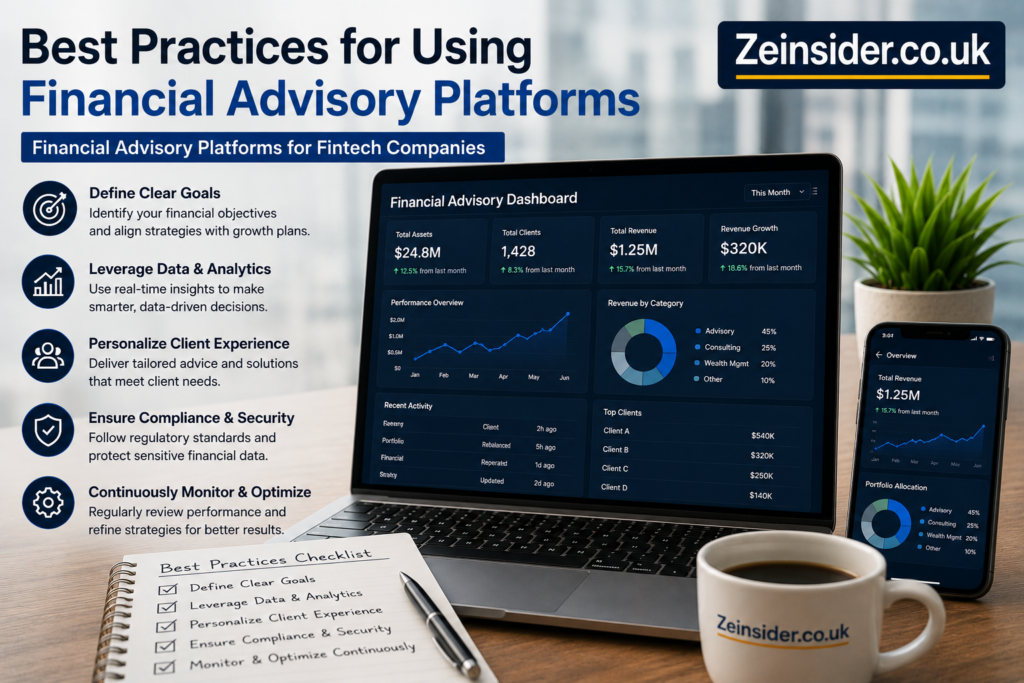
Implementing financial advisory platforms for fintech companies successfully requires more than purchasing software. Organizations should establish clear financial objectives before deployment so dashboards, KPIs, and reporting workflows align with strategic priorities. Finance teams should regularly validate financial data to ensure predictive analytics remain accurate and reliable. Automated reports should be reviewed periodically rather than accepted without verification, particularly during periods of rapid business growth or regulatory change. Continuous employee training helps maximize platform utilization while reducing operational errors. Companies should also review integration performance regularly to ensure synchronized systems remain accurate across departments. Executives should use advisory insights alongside professional judgment instead of relying exclusively on automated recommendations. Finally, periodic platform evaluations help organizations adopt new features that improve efficiency and maintain competitive advantage.
Best Practices Checklist
- Define measurable financial KPIs before implementation.
- Keep financial data clean and consistently updated.
- Automate recurring reporting whenever possible.
- Monitor compliance dashboards regularly.
- Integrate all major financial systems.
- Train employees on new platform capabilities.
- Review AI-generated recommendations critically.
- Conduct regular security and access audits.
Common Mistakes to Avoid
Many organizations fail to achieve maximum value from financial advisory platforms because they overlook implementation fundamentals. One common mistake is selecting software based only on price rather than functionality and long-term scalability. Another frequent issue involves poor data quality, which reduces forecasting accuracy and weakens business insights. Some companies also neglect employee training, causing staff to underutilize valuable features already included within the platform. Ignoring cybersecurity practices increases exposure to financial data breaches and regulatory penalties. Businesses sometimes attempt to customize platforms excessively, creating unnecessary complexity that increases maintenance costs. Others fail to establish measurable financial KPIs before implementation, making it difficult to evaluate success objectively. Avoiding these mistakes helps organizations maximize return on investment while strengthening financial operations.
Common Pitfalls
- Choosing software without evaluating future scalability.
- Depending entirely on manual financial processes.
- Ignoring integration compatibility.
- Using inaccurate or outdated financial data.
- Overlooking employee onboarding and training.
- Failing to monitor compliance regularly.
- Delaying software updates.
- Neglecting cybersecurity controls.
Pro Tips
Build Around Business Goals
Choose features that directly support your organization’s strategic objectives rather than selecting the platform with the longest feature list.
Prioritize Automation
Automate repetitive reporting, reconciliations, budgeting, and compliance workflows to improve productivity and reduce operational costs.
Monitor KPIs Frequently
Review financial dashboards consistently so leadership teams can identify opportunities and emerging risks before they affect performance.
Invest in Continuous Learning
Encourage finance professionals to stay current with evolving fintech regulations, AI capabilities, and financial management technologies.
Plan for Growth
Select advisory platforms that can easily support additional users, new markets, international expansion, and higher transaction volumes without major infrastructure changes.
Conclusion
Financial advisory platforms for fintech companies have become indispensable tools for organizations seeking smarter financial management, stronger compliance, and sustainable long-term growth. They combine budgeting, forecasting, financial analytics, AI-powered insights, investor reporting, and automation into centralized platforms that improve decision-making across every level of the business. As fintech competition continues increasing, organizations require accurate financial intelligence to allocate resources efficiently, manage risks proactively, and respond quickly to changing market conditions. Modern advisory platforms also strengthen collaboration by integrating accounting, banking, CRM, ERP, and payment systems into a unified financial ecosystem. Businesses that carefully evaluate platform capabilities, prioritize data quality, and embrace automation position themselves for greater operational efficiency and improved profitability. While technology continues evolving rapidly, the importance of strategic financial planning remains constant. Investing in the right advisory platform today creates a stronger foundation for innovation, regulatory readiness, investor confidence, and future business success.
Frequently Asked Questions (FAQs)
1. What are financial advisory platforms for fintech companies?
They are software solutions that help fintech organizations manage budgeting, forecasting, compliance, financial reporting, investment planning, and strategic decision-making using real-time financial data.
2. Are financial advisory platforms suitable for startups?
Yes. Many platforms are designed specifically for startups, offering budgeting, fundraising support, cash flow management, and investor reporting at scalable pricing levels.
3. How does AI improve financial advisory platforms?
AI enhances forecasting, detects financial anomalies, automates reporting, identifies risks, and provides predictive recommendations that improve financial planning.
4. Can advisory platforms integrate with accounting software?
Yes. Most modern platforms integrate with accounting systems, ERP software, CRM applications, banking APIs, payroll systems, and payment gateways.
5. Why is compliance important in fintech financial management?
Regulatory compliance helps organizations avoid legal penalties, maintain customer trust, protect sensitive financial information, and satisfy industry regulations.
6. What features should fintech companies prioritize?
Key features include forecasting, budgeting, compliance monitoring, cash flow analytics, investor reporting, AI-powered insights, integrations, and customizable dashboards.
7. Are cloud-based advisory platforms secure?
Reputable providers typically offer encryption, multi-factor authentication, access controls, audit logs, regular security updates, and compliance certifications.
8. How do advisory platforms support fundraising?
They generate financial forecasts, valuation models, investor reports, KPI dashboards, and performance analytics that strengthen fundraising presentations.
9. Can small fintech businesses benefit from these platforms?
Absolutely. Small businesses often gain significant value through improved financial visibility, automation, and better resource planning without requiring large finance teams.
10. What is the biggest advantage of financial advisory platforms?
Their greatest advantage is providing real-time financial intelligence that enables faster, more informed business decisions while improving efficiency and reducing operational risk.
Author Bio
Author: Editorial Team
The Editorial Team specializes in fintech, financial technology, SaaS platforms, digital banking, enterprise software, and business innovation. Every article is researched using reliable industry knowledge and written according to Google’s EEAT and Helpful Content principles, providing readers with practical, accurate, and actionable insights that support informed business decisions.